Loading site navigation and page content

Phone:
+971 4 876 8530Email:
info@luxactuaries.com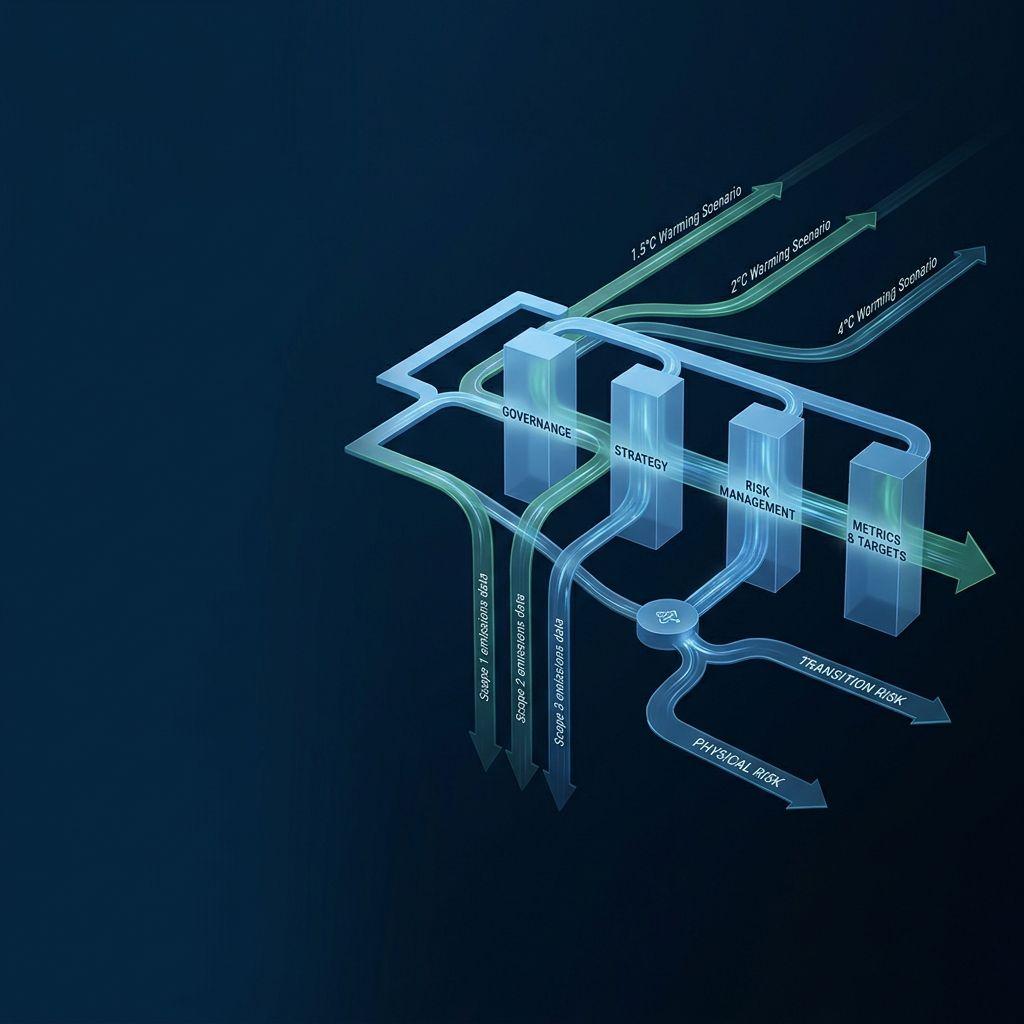
We help organisations prepare IFRS S1 and S2 sustainability disclosures, quantifying long-term climate and ESG risks with actuarial rigour.
IFRS S1 and IFRS S2 are sustainability disclosure standards issued by the International Sustainability Standards Board (ISSB). IFRS S1 sets out the general requirements for disclosing sustainability-related financial information. IFRS S2 addresses climate-related risks and opportunities specifically, covering physical risks, transition risks, and greenhouse gas emissions.
Actuaries are well placed to model long-term uncertainties and climate-related financial risks. Accurate ESG reporting requires rigorous data analysis, scenario modelling, and translating sustainability performance into measurable financial impacts.
Our team makes sure your sustainability reporting meets the requirements of IFRS S1 and S2. We connect traditional financial reporting with forward-looking sustainability metrics so organisations can make decisions based on real numbers.
Discuss your reporting requirements and audit timelines.

ESG & Sustainability Lead
Vasilis AggelouFrom initial impact assessments to final ESG disclosures, we handle your IFRS S1 and S2 reporting.

Guidance on disclosing sustainability-related financial information and establishing governance frameworks.

Scenario analysis and modelling of physical and transition risks to meet climate-specific disclosure standards.

Integration of sustainability reporting with traditional financial statements.

We bring together actuaries, risk managers, and sustainability specialists to produce thorough ESG reporting.

Ongoing monitoring and tracking of sustainability metrics over time.
IFRS S1 sets out the general requirements for disclosing sustainability-related financial information. IFRS S2 specifically covers climate-related disclosures. Together they give investors comparable, decision-useful sustainability data.
Actuaries specialise in modelling long-term risks, uncertainty, and financial impacts. These skills are needed for climate scenario analysis and for connecting ESG risks to the numbers in enterprise risk management frameworks.
It is the practice of disclosing a company's environmental impacts, risks, and opportunities (such as carbon emissions, resource usage, and climate transition plans) in a standardised format for stakeholders.
We help you navigate complex reporting standards, build reliable data models, and produce a transparent ESG report that gives investors and regulators confidence in your sustainability disclosures.
Get in touch for IFRS S1 and S2 consulting and actuarial-led ESG reporting.
Get in Touch Today
True ESG integration extends far beyond surface-level policy statements. Learn how intensive operational training bridges knowledge gaps, allowing employees across hierarchies to execute and maintain complex corporate sustainability workflows.

Severe climate catastrophes are producing cascading economic impacts globally. Understand why deep actuarial expertise is now indispensable for accurately pricing accelerating weather-related risks and developing resilient macro-financial strategies.

In a rapidly evolving business landscape, sustainability reporting secures corporate resilience. Learn why integrating comprehensive environmental and social return on investment (SROI) evaluations is essential for sustainable operation.